How it works: the queue,the worksheet, the condition list
Three screens, one file. LN 2026090412 came in at 17:42 on a Tuesday and this is what happened to it, in the order you'd open the screens the next morning.
- URLA p.1
- credit p.9
- paystub YTD, co borrower p.27
- W2 2024, co borrower p.31
- Schedule C 2024 p.47
- Schedule C 2025 p.52
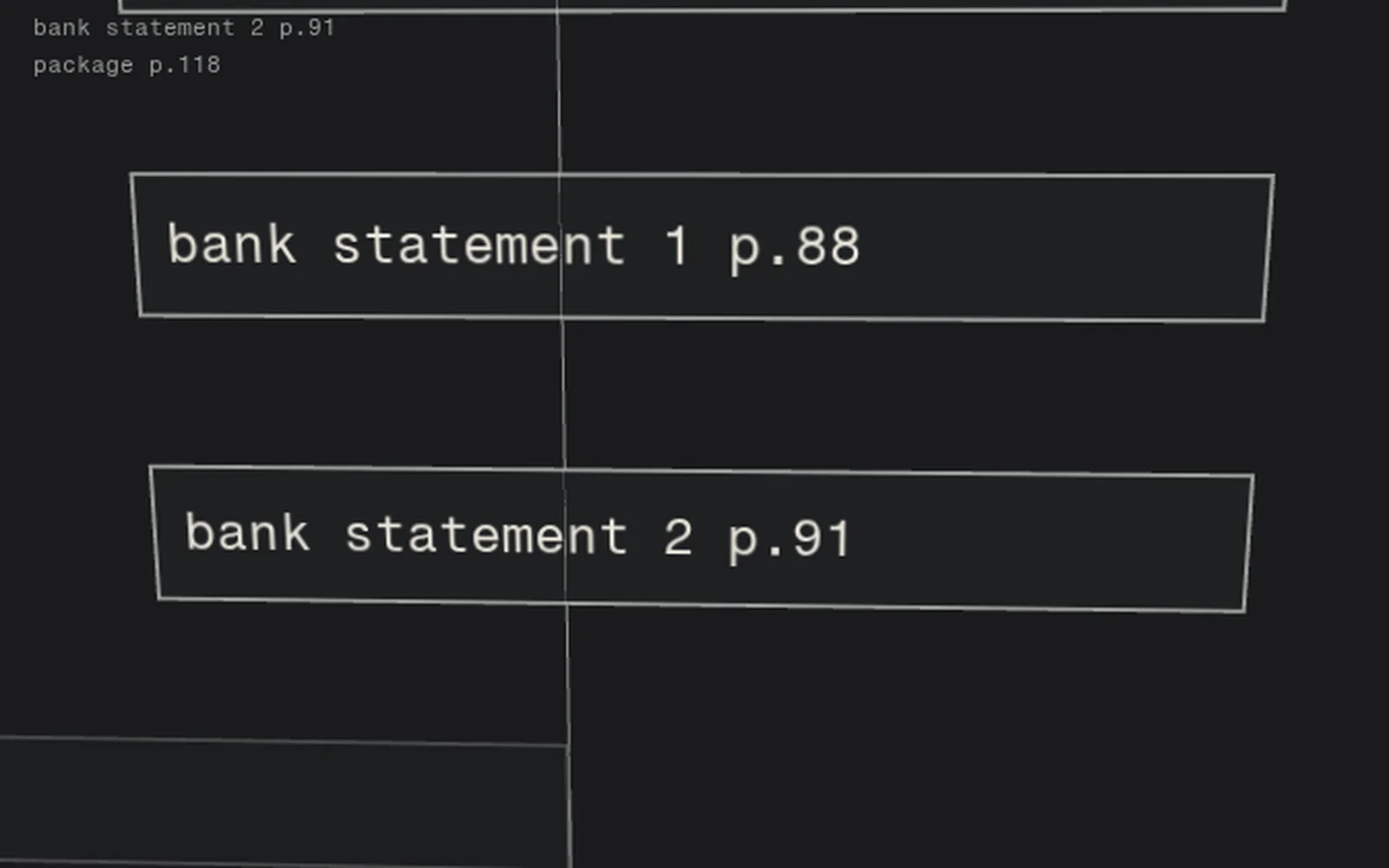
- bank statement 1 p.88
- bank statement 2 p.91
- package p.118
On LN 2026090418 the W2 on p.31 and the paystub on p.27 name different employers. Both tabs stay out. Nothing is chosen.
118 pages named. One package.
The queue
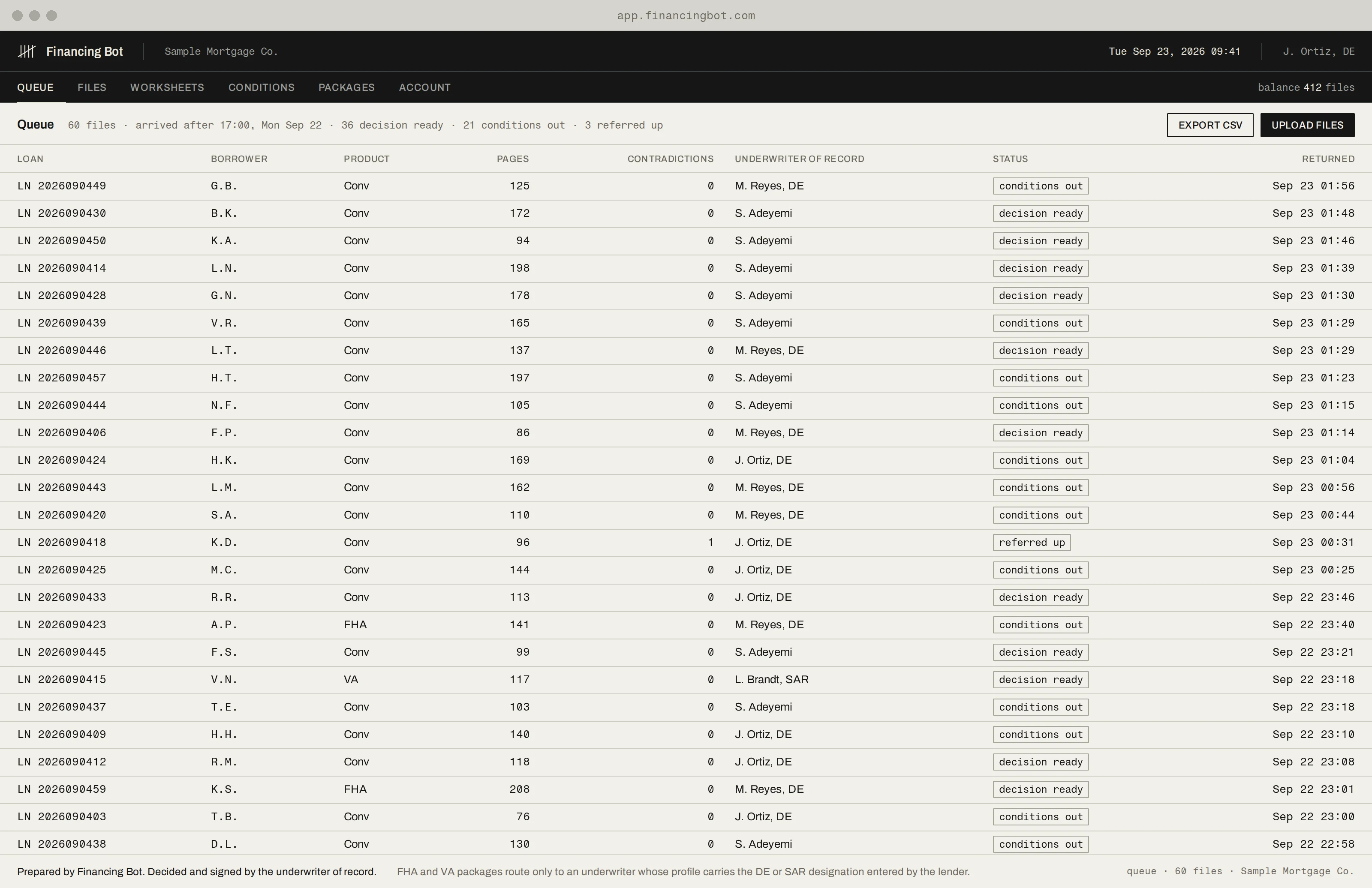
Every page in the upload gets a name and a number before anything is calculated. Duplicates fold into one entry. A page the software cannot read (a bad scan, a locked PDF) is listed by number so the processor knows exactly what to resend, and the file is not deducted until it comes back whole.
The contradictions column is a count, and most rows read zero. When it does not, the two pages are listed side by side in the package with their cites, and the file's status chip reads referred up. The count is the first thing an underwriter should look at in the morning, and it is the fourth column for that reason.
The returned column is a time, and the queue sorts by it. A complete file on the standard queue comes back the same business day; Enterprise files go ahead of the standard packs. The underwriter of record column shows the name and designation the package was addressed to, which on an FHA or VA file has to carry DE or SAR before the file will route at all.
The worksheet
The Recalculation- Schedule C line 31 net profit, 2024p.4784,600.00
- plus line 13 depreciationp.4794,450.00
- plus line 12 depletionp.4794,450.00
- plus line 30 business use of homep.4798,650.00
- minus line 24b mealsp.4797,270.00
- Schedule C line 31 net profit, 2025p.52189,420.00
- plus line 13 depreciationp.52199,820.00
- plus line 12 depletionp.52199,820.00
- plus line 30 business use of homep.52204,020.00
- minus line 24b mealsp.52201,900.00
- ÷ 248,412.50
| line | cite | running total |
|---|---|---|
| Schedule C line 31 net profit, 2024 | p.47 | 84,600.00 |
| plus line 13 depreciation | p.47 | 94,450.00 |
| plus line 12 depletion | p.47 | 94,450.00 |
| plus line 30 business use of home | p.47 | 98,650.00 |
| minus line 24b meals | p.47 | 97,270.00 |
| Schedule C line 31 net profit, 2025 | p.52 | 189,420.00 |
| plus line 13 depreciation | p.52 | 199,820.00 |
| plus line 12 depletion | p.52 | 199,820.00 |
| plus line 30 business use of home | p.52 | 204,020.00 |
| minus line 24b meals | p.52 | 201,900.00 |
| ÷ 24 | 8,412.50 | |
| monthly qualifying income | p.47, p.52 | $8,412.50 |
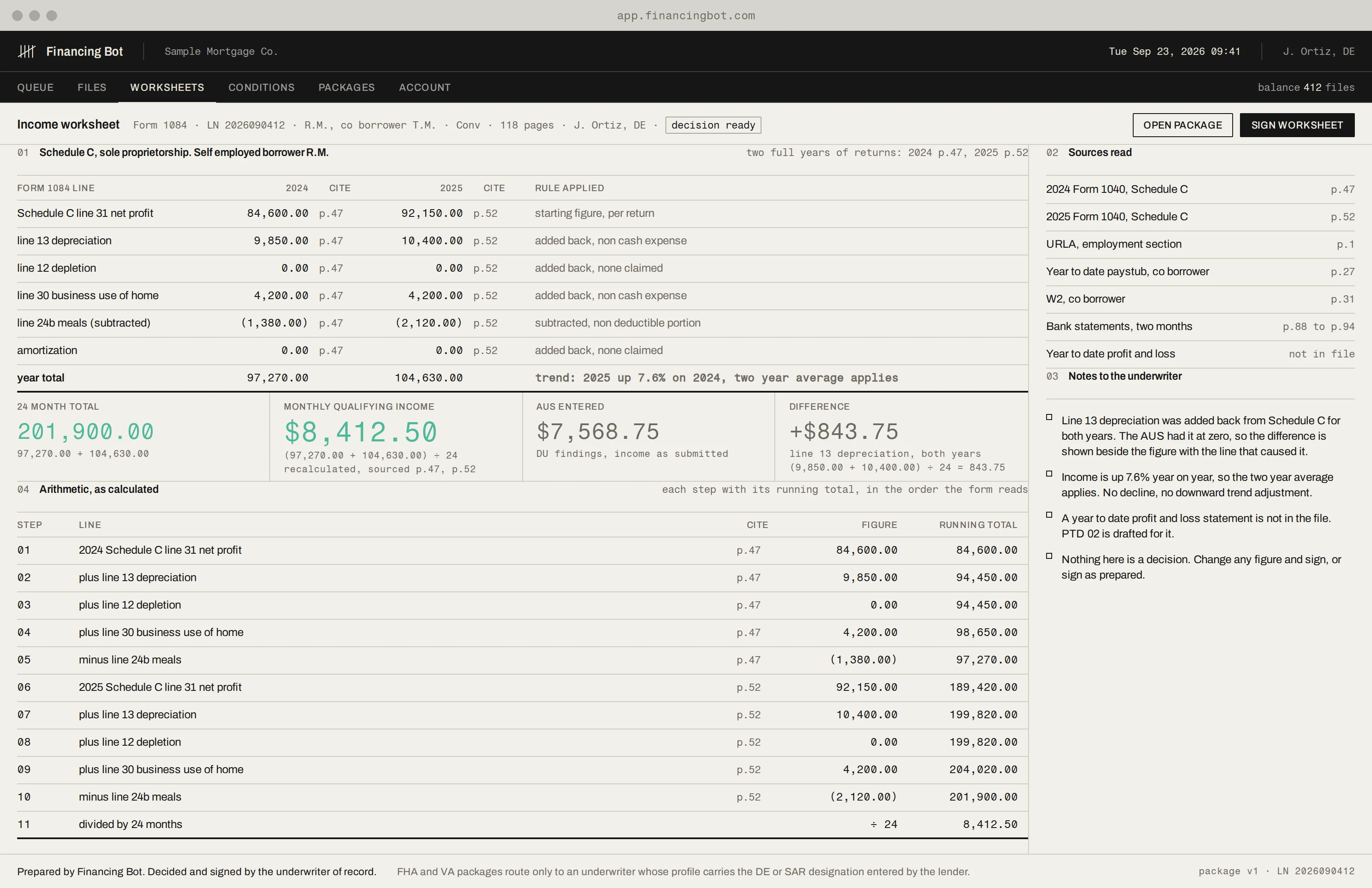
That figure is the monthly qualifying income the package carries. The screenshot beneath is the worksheet it came from. Read the AUS entered figure at its foot: the difference is printed with the line that caused it, so the question of whether to run the findings again is already framed for you.
Form 91 is Freddie Mac's worksheet. The rows read from the same Schedule C lines, so the labels change and the figures do not.
The condition list
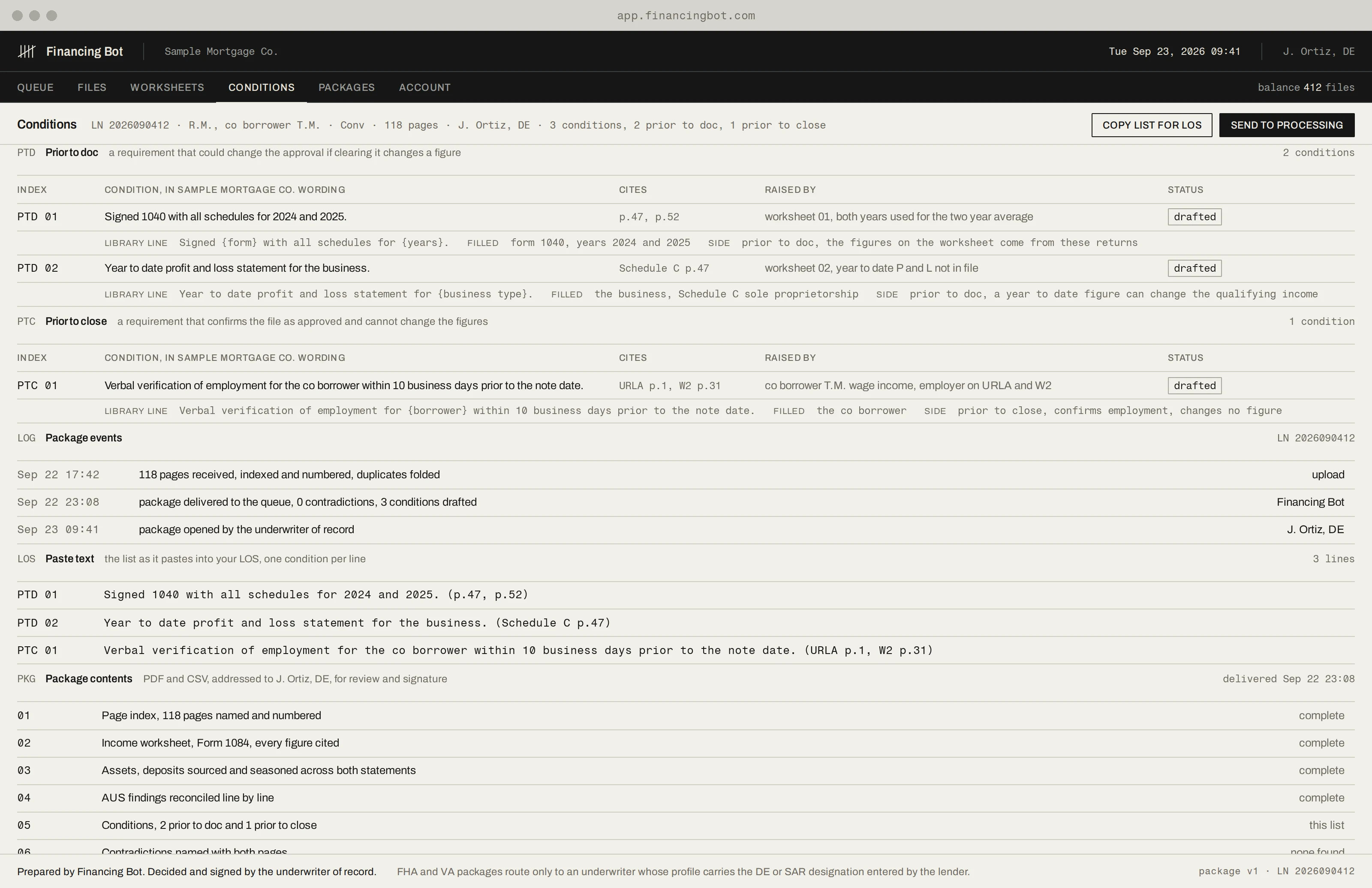
Anything that could change the approval sits here: income documents, asset sources, the appraisal, anything the AUS ran on. On the sample file that is the signed returns for both years and the year to date profit and loss for the business, each row ending in the page that raised it.
What has to be in the file before funding but cannot move the decision. On the sample file that is the verbal verification of employment for the co borrower inside its ten business day window, cited to the URLA and the W2. When a row could sit on either side, it sits in prior to doc.
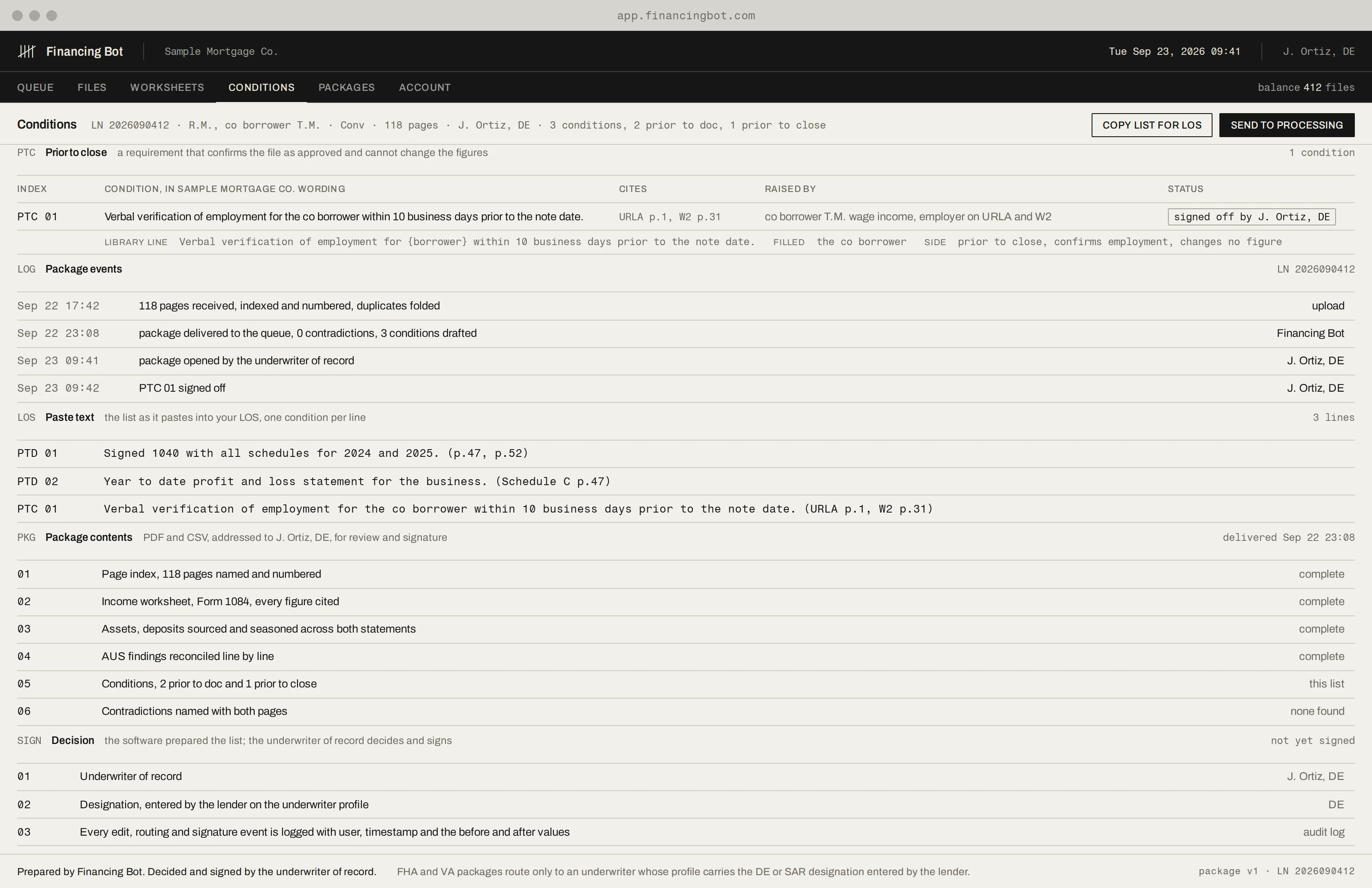
One file is referred up. The 2024 W2 and the year to date paystub name different employers; both pages are listed. Nothing was decided.
Referred up is a status, not a verdict. The package for that file holds the two pages side by side with their cites, the rest of the file worked as far as the rule allows, and no recommendation of any kind. It routes to the underwriter of record ahead of the decision ready files, because a named contradiction is the file most worth opening first.
Who signs
Every package is addressed to one named underwriter of record. On an FHA or VA file the package routes only to a profile that carries a DE or SAR designation entered by your account owner; with none entered, the file waits in the queue with a routing note and is not deducted. The underwriter changes what they disagree with, the original figure stays beside the edit, and the signature event is logged with the time.
Financing Bot prepares, calculates and documents. It does not approve, decline or decide any loan. Every decision is made and signed by the lender's named underwriter, who on FHA and VA loans personally holds a DE or SAR designation. The lender keeps its representations and warranties and provides the specific principal reasons for any adverse action that Regulation B requires. Any agency relief attaches to verified data and the agencies' own models, not to this software.
Prepared by Financing Bot. Decided and signed by the underwriter of record.

A file pack is the only thing to buy. Upload opens the minute the receipt sends.
Buy a file packfrom $2,400